Buy vip-lounge.com ?
We are moving the project
vip-lounge.com .
Are you interested in purchasing the domain
vip-lounge.com ?
domain@kv-gmbh.de · 0541-91531010
Buy vip-lounge.com ?
Why is the Beringer mixer not producing any sound?
The Beringer mixer may not be producing any sound due to several possible reasons. It could be a problem with the power supply, such as a loose or disconnected power cable. Another possibility is that the input and output connections are not properly set up, or there could be an issue with the internal components of the mixer. It's also possible that the mixer's volume or gain controls are set incorrectly, or that the mixer is in a muted or standby mode. Troubleshooting these potential issues can help identify and resolve the problem with the Beringer mixer not producing any sound. **
How do I reserve a Euro Joker VIP?
To reserve a Euro Joker VIP, you can typically do so through the official Euro Joker website or by contacting their customer service directly. You may need to create an account on the website and provide your payment information to secure your reservation. Make sure to check the availability of the VIP service and any specific requirements or restrictions before making your reservation. **

Similar search terms for Beringer-Knights-Valley-Reserve
Top-Angebote
Products related to Beringer-Knights-Valley-Reserve:
-
Feuillatte Nicolas Champagne Rosé Brut Reserve Exclusive Nicolas FeuillatteThe Champagne Rosé Brut Reserve Exclusive by Nicolas Feuillatte is a label with an intense and harmonious character, made with a majority percentage of Pinot Meunier and Pinot Noir, complemented by a small amount of Chardonnay, which adds a touch of refined elegance to the cuvée. It is a rich and structured Champagne, with a broad and fruity sip, crafted to enhance the best characteristics of this important type of sparkling wine. The enveloping aromas of small red fruits are well balanced by a sip of great mineral freshness, making it particularly gastronomic and suitable for being enjoyed at the table, even with important menus. The Rosé Brut Reserve Exclusive is a Champagne produced by one of the largest and most famous Houses in the world. The Nicolas Feuillatte brand emerged only in the mid-1970s in the world of Champagne, but it has distinguished itself with a range of quality labels. The success is primarily based on a vast heritage of vineyards. There are over two thousand cultivated hectares that make to five thousand small suppliers. The plots are located in the territories of Premier and Grand Cru, ensuring always high-quality grapes. The Reserve Rosé Exclusive represents the most pleasantly harmonious and enveloping label in the range, which captivates and fascinates with its aromatic richness and satisfying taste fullness. The Reserve Exclusive by Nicolas Feuillatte is a Brut Rosé Champagne made with Pinot Noir, Pinot Meunier, and Chardonnay grapes, sourced from vineyards cultivated in the Côte de Blancs region. The red grapes are vinified with a brief contact with the skins to extract aromas and color. After a few months of aging, the vins clairs are blended to create the final cuvée. The second fermentation takes place in the bottle according to the Champenoise Method, with a 36-month aging on the lees. In the glass, it presents a light pink color with bright reflections, marked by a fine and continuous perlage. On the nose, it offers aromas of small red fruits, citrus hints, floral nuances, and memories of bread crust. On the palate, it has a good body, with rich and broad aromas that unfold harmoniously towards a balanced and refreshing finish.47,00 £*Shipping: 48,00 £Secure redirect to the provider
-
Zinfandel Rosé 'Classic' Beringer 2024The Zinfandel Rosé 'Classic' from the American winery Beringer represents an interpretation with a smooth and refreshing drinkability, made with one of the grape varieties that has most contributed to enhancing Californian enology. Zinfandel is a clone of Primitivo that arrived in America in the first half of the 19th century, probably through the Austrian Empire, which at the time dominated the territories of Dalmatia. In fact, this variety is also related to the Croatian grape Crljenak Kaštelanski, from which it likely originated, spreading in the United States and in Puglia. Today, Zinfandel represents more than 10% of California's ampelographic platform, a state where it is vinified with excellent results both in red and rosé, appreciated for the extraordinary sugar concentration of the grapes at maturity and for the extremely soft tannin. Beringer Zinfandel 'Classic' Rosé is made exclusively from Zinfandel grapes grown on predominantly clay soils rich in skeleton. Following the harvest, the bunches are transferred to the winery where they are selected and then crushed in stainless steel tanks for controlled temperature alcoholic fermentation, associated with a short contact of the must with the skins of about 3 hours, sufficient to extract the desired amount of anthocyanin pigments. After a few months of aging in the same type of wine containers, the mass is finally bottled. To the eye, the Californian Beringer Rosé 'Classic' expresses a soft and bright peach pink color. The aromatic spectrum opens up to fruity and floral notes of red currant, melon, orange peel, rose, lavender, and lily, reached by delicate spicy perceptions of nutmeg. A very fruity and dynamic sip, with appetizing softness balanced by tantalizing freshness.13,00 £*Shipping: 48,00 £Secure redirect to the provider
-
Champagne Brut Grande Reserve GossetChampagne Brut Grande Réserve Gosset represents the signature label of the Épernay-based Maison. For more than 30 it has expressed its fresh and elegant, delicate and refined style. It is a classic blend made with a majority base of Chardonnay and Pinot Noir, supplemented by a small balance of Munier, which gives a pleasant touch of fruity softness. The careful selection of excellent quality grapes, age-old savoir-faire and long ageing on the lees gives a Champagne with ripe and complex aromas, but capable of retaining the clear mineral freshness typical of the terroir. Brut Grande Réserve Champagne is the fruit of one of the oldest Maisons in the region. The origins of the Gosset brand date back to the 18th century and are based on the experience of as many as 14 generations of Champagne winemakers. The Chardonnay, Pinot Noir, and Meunier grapes come from a selection of estate vineyards located mostly in the cru of Aÿ, Bouzy, Ambonnay, Le Mesnil-sur-Oger and Villers-Marmery. Vinification takes place separately by individual parcel and by grape variety. Fermentations take place in temperature-controlled stainless steel tanks. Base wines are aged a few months on the lees without malolactic fermentation to preserve varietal purity and freshness. The vins clairs are then blended to create a harmonious and balanced cuvée. The second fermentation takes place in the bottle according to the Champenoise Method, with a stay on the lees for at least three years before dégorgement. Bottles are marketed after an additional six months of ageing in the Maison's historic caves. Champagne Grande Réserve Brut, made by Maison Gosset, is a bottle with a classic face, satisfying every enthusiast with its character of elegance and rich intensity. To the eye, it has a beautiful luminous gold colour, shot through with brilliant reflections. The perlage is delicate, subtle and very persistent. The bouquet gives intense and elegant aromas reminiscent above all of the aromas of ripe yellow-fleshed fruit, peach, mirabelle, scents of orange blossom and hawthorn, fragrant notes of citrus peel, soft nuances of pineapple, small pastries and more evolved hints of dried fruit and pain d'épices. The entry on the palate is broad and creamy, with a rich and finely faceted aromatic palette, lengthening toward a harmonious and persistent finish of remarkable freshness.56,00 £*Shipping: 48,00 £Secure redirect to the provider


-
Is a trough valley a valley bottom?
Yes, a trough valley is a type of valley bottom. A trough valley is a long, narrow valley with steep sides that has been carved out by glaciers. It is typically U-shaped and often contains a river or stream at the bottom. The valley bottom refers to the lowest part of the valley, which includes the floor and the area where water flows. Therefore, the trough valley is considered a type of valley bottom. **
-
How were knights killed?
Knights were killed in battle through various means, including being struck by swords, spears, arrows, or other weapons. They were also vulnerable to being trampled by horses or falling from their mounts. Additionally, knights could be killed by being overwhelmed by multiple attackers or through strategic maneuvers that exploited weaknesses in their armor or defenses. Overall, the risks of combat and the nature of medieval warfare made knights susceptible to a range of fatal injuries on the battlefield. **
-
Did farmers become knights?
In medieval times, it was not common for farmers to become knights. Knights were typically members of the nobility or trained warriors who served a lord or king. However, in some cases, a farmer could potentially rise to the status of a knight if they displayed exceptional skill in combat or were granted the title by a higher-ranking noble or monarch. Overall, the path from farmer to knight was not a common or straightforward one in medieval society. **
-
Who are famous knights?
Some famous knights throughout history include Sir Lancelot, a prominent figure in the Arthurian legends known for his bravery and loyalty; Sir William Marshal, a renowned medieval knight and statesman who served under multiple English kings; and Sir Gawain, a noble and chivalrous knight from Arthurian legend known for his moral integrity and courage. These knights are celebrated for their valor, honor, and dedication to the code of chivalry. **
What replaced the knights?
The rise of gunpowder and firearms led to the decline of the traditional knight in warfare. As firearms became more advanced and widespread, the heavy armor and cavalry tactics of the knights became less effective on the battlefield. Additionally, the centralized power of monarchies and the professionalization of armies led to the decline of the feudal system and the need for knights as a military force. Instead, professional standing armies and modern military tactics replaced the role of the knights in warfare. **
How did knights live?
Knights lived a life of privilege and power, often residing in castles or manor houses. They were trained in combat and chivalry, and were expected to uphold a code of honor and loyalty to their lord. Knights were often landowners and had vassals who worked the land for them. They participated in tournaments, jousting, and other martial competitions, and were expected to protect their lord's lands and people. Overall, knights lived a life of luxury and prestige, but also had the responsibility of defending their lord and upholding the ideals of chivalry. **
Top-Angebote
Products related to Beringer-Knights-Valley-Reserve:
-
Cabernet Sauvignon 'Knights Valley' Beringer 2019Il ‘Knights Valley’ Cabernet Sauvignon della realtà produttiva californiana Beringer si configura come un’interpretazione ricca e piena di questo popolare vitigno di origine bordolese. Con una produzione oltremodo ampia e di qualità, la storica tenuta Beringer si articola in diverse cantine sparse in alcune delle più pregiate zone viticole della California. Tra queste rientra la Knights Valley, dove la tenuta possiede e coltiva vigneti fin dagli anni ’60. Nel 1974 la denominazione “Knights Valley” fu menzionata per la prima volta in etichetta e il contributo di Beringer è stato determinante per il riconoscimento AVA ottenuto nel 1983. Il Cabernet Sauvignon Beringer ‘Knights Valley’ viene elaborato a partire da una solida base di Cabernet Sauvignon, cui vengono aggiunte piccole percentuali di Merlot (8%), Cabernet Franc (2%), Malbec (2%) e Petit Verdot (1%). I vigneti sono impiantati su suoli rocciosi di origine alluvionale ben drenati. Le diverse parcelle vengono raccolte e vinificate separatamente e tutte le fermentazioni sono svolte in vasche di acciaio inox con una lunga macerazione sulle bucce. Terminati i processi fermentativi, le masse sono trasferite in botti di rovere francese, per il 30% nuove, dove hanno luogo la fermentazione malolattica e l’invecchiamento di 15 mesi che precede l’imbottigliamento e l’ulteriore riposo in vetro. Beringer Cabernet Sauvignon ‘Knights Valley’ mostra un colore rosso rubino intenso. Articolati e vividi i richiami di amarena, mora, fico, mirtillo e lavanda, arricchiti da percezioni tostate e speziate di vaniglia e caffè. In bocca risulta ricco e corposo, rotondo e intenso, dalla complessa trama tannica che si accompagna a succosa freschezza. Un vino californiano dotato di grande longevità, accostabile a succulente preparazioni a base di carni varie che ne domino l’importante struttura.51,00 £*Shipping: 48,00 £Secure redirect to the provider
-
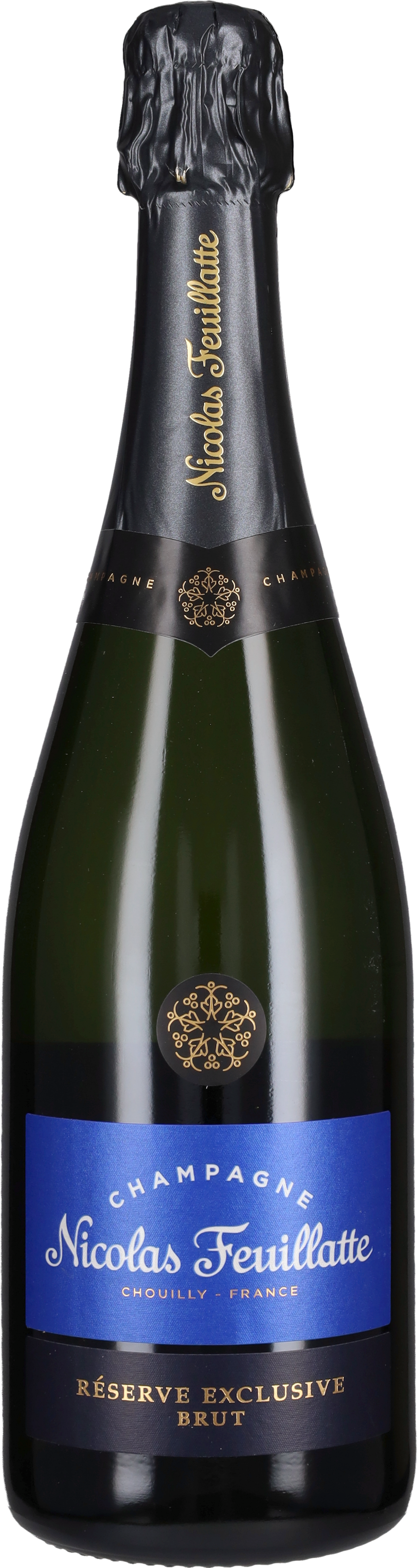
Feuillatte Nicolas Champagne Brut Reserve Exclusive Nicolas FeuillatteThe Champagne Brut Reserve Exclusive by Nicolas Feuillatte is the true business card of the Maison, the label that best represents the style of this young and prestigious reality of Champagne. In just a few decades, Nicolas Feuillatte has managed to accelerate his rise and establish himself as one of the most recognized brands in the world. It is a classic cuvée, composed of Meunier, Pinot Noir, and Chardonnay, which expresses a mature and rich harmony and a perfect balance between rich fruity aromas, citrus intensity, and mineral freshness. The Brut Reserve Exclusive is a Champagne produced by a brand famous worldwide for the quality of its Champagnes. Although the Maison Nicolas Feuillatte was founded only around the mid-1970s, it has managed to secure a prestigious place in the Champagne landscape. The success is based on a vineyard area of over two thousand hectares belonging to about five thousand conferitors. These are parcels cultivated in the municipal territories of the most important Premier Cru and Grand Cru, which guarantee every year high-quality grapes of high level. The Champagne Brut Reserve Exclusive represents the perfect synthesis of the territory, a true iconic label of a Maison that has made elegance and finesse its distinctive mark. The Reserve Exclusive is a Brut Champagne from the Maison Nicolas Feuillatte made with a selection of Meunier, Pinot Noir, and Chardonnay grapes, which come from vineyards cultivated in the area of the Côte de Blancs, on soils predominantly composed of limestone marls, with outcrops of gypsum. Each grape variety is vinified separately, and at the end of fermentation, the vins clairs rest for a few months before proceeding to the assemblage. The final cuvée undergoes secondary fermentation in the bottle according to the Méthode Champenoise, with a yeast aging of 36 months. In the glass, it presents a straw yellow color with bright golden reflections. The bouquet is wide and rich, with aromas of ripe fruit, citrus hints, floral nuances, memories of bread crust, and soft spices. The body is creamy and soft, with a fresh and pleasantly savory sip.38,00 £*Shipping: 48,00 £Secure redirect to the provider
-
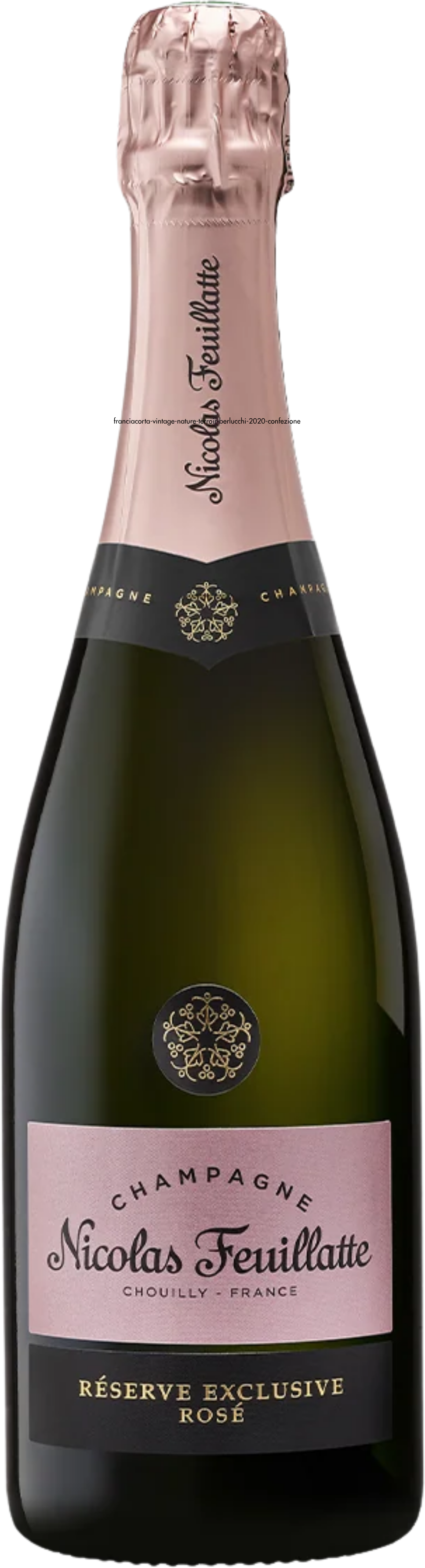
Feuillatte Nicolas Champagne Rosé Brut Reserve Exclusive Nicolas FeuillatteThe Champagne Rosé Brut Reserve Exclusive by Nicolas Feuillatte is a label with an intense and harmonious character, made with a majority percentage of Pinot Meunier and Pinot Noir, complemented by a small amount of Chardonnay, which adds a touch of refined elegance to the cuvée. It is a rich and structured Champagne, with a broad and fruity sip, crafted to enhance the best characteristics of this important type of sparkling wine. The enveloping aromas of small red fruits are well balanced by a sip of great mineral freshness, making it particularly gastronomic and suitable for being enjoyed at the table, even with important menus. The Rosé Brut Reserve Exclusive is a Champagne produced by one of the largest and most famous Houses in the world. The Nicolas Feuillatte brand emerged only in the mid-1970s in the world of Champagne, but it has distinguished itself with a range of quality labels. The success is primarily based on a vast heritage of vineyards. There are over two thousand cultivated hectares that make to five thousand small suppliers. The plots are located in the territories of Premier and Grand Cru, ensuring always high-quality grapes. The Reserve Rosé Exclusive represents the most pleasantly harmonious and enveloping label in the range, which captivates and fascinates with its aromatic richness and satisfying taste fullness. The Reserve Exclusive by Nicolas Feuillatte is a Brut Rosé Champagne made with Pinot Noir, Pinot Meunier, and Chardonnay grapes, sourced from vineyards cultivated in the Côte de Blancs region. The red grapes are vinified with a brief contact with the skins to extract aromas and color. After a few months of aging, the vins clairs are blended to create the final cuvée. The second fermentation takes place in the bottle according to the Champenoise Method, with a 36-month aging on the lees. In the glass, it presents a light pink color with bright reflections, marked by a fine and continuous perlage. On the nose, it offers aromas of small red fruits, citrus hints, floral nuances, and memories of bread crust. On the palate, it has a good body, with rich and broad aromas that unfold harmoniously towards a balanced and refreshing finish.47,00 £*Shipping: 48,00 £Secure redirect to the provider
-
Zinfandel Rosé 'Classic' Beringer 2024The Zinfandel Rosé 'Classic' from the American winery Beringer represents an interpretation with a smooth and refreshing drinkability, made with one of the grape varieties that has most contributed to enhancing Californian enology. Zinfandel is a clone of Primitivo that arrived in America in the first half of the 19th century, probably through the Austrian Empire, which at the time dominated the territories of Dalmatia. In fact, this variety is also related to the Croatian grape Crljenak Kaštelanski, from which it likely originated, spreading in the United States and in Puglia. Today, Zinfandel represents more than 10% of California's ampelographic platform, a state where it is vinified with excellent results both in red and rosé, appreciated for the extraordinary sugar concentration of the grapes at maturity and for the extremely soft tannin. Beringer Zinfandel 'Classic' Rosé is made exclusively from Zinfandel grapes grown on predominantly clay soils rich in skeleton. Following the harvest, the bunches are transferred to the winery where they are selected and then crushed in stainless steel tanks for controlled temperature alcoholic fermentation, associated with a short contact of the must with the skins of about 3 hours, sufficient to extract the desired amount of anthocyanin pigments. After a few months of aging in the same type of wine containers, the mass is finally bottled. To the eye, the Californian Beringer Rosé 'Classic' expresses a soft and bright peach pink color. The aromatic spectrum opens up to fruity and floral notes of red currant, melon, orange peel, rose, lavender, and lily, reached by delicate spicy perceptions of nutmeg. A very fruity and dynamic sip, with appetizing softness balanced by tantalizing freshness.13,00 £*Shipping: 48,00 £Secure redirect to the provider
-
Why is the Beringer mixer not producing any sound?
The Beringer mixer may not be producing any sound due to several possible reasons. It could be a problem with the power supply, such as a loose or disconnected power cable. Another possibility is that the input and output connections are not properly set up, or there could be an issue with the internal components of the mixer. It's also possible that the mixer's volume or gain controls are set incorrectly, or that the mixer is in a muted or standby mode. Troubleshooting these potential issues can help identify and resolve the problem with the Beringer mixer not producing any sound. **
-
How do I reserve a Euro Joker VIP?
To reserve a Euro Joker VIP, you can typically do so through the official Euro Joker website or by contacting their customer service directly. You may need to create an account on the website and provide your payment information to secure your reservation. Make sure to check the availability of the VIP service and any specific requirements or restrictions before making your reservation. **
-
Is a trough valley a valley bottom?
Yes, a trough valley is a type of valley bottom. A trough valley is a long, narrow valley with steep sides that has been carved out by glaciers. It is typically U-shaped and often contains a river or stream at the bottom. The valley bottom refers to the lowest part of the valley, which includes the floor and the area where water flows. Therefore, the trough valley is considered a type of valley bottom. **
-
How were knights killed?
Knights were killed in battle through various means, including being struck by swords, spears, arrows, or other weapons. They were also vulnerable to being trampled by horses or falling from their mounts. Additionally, knights could be killed by being overwhelmed by multiple attackers or through strategic maneuvers that exploited weaknesses in their armor or defenses. Overall, the risks of combat and the nature of medieval warfare made knights susceptible to a range of fatal injuries on the battlefield. **
Similar search terms for Beringer-Knights-Valley-Reserve
-
Champagne Brut Grande Reserve GossetChampagne Brut Grande Réserve Gosset represents the signature label of the Épernay-based Maison. For more than 30 it has expressed its fresh and elegant, delicate and refined style. It is a classic blend made with a majority base of Chardonnay and Pinot Noir, supplemented by a small balance of Munier, which gives a pleasant touch of fruity softness. The careful selection of excellent quality grapes, age-old savoir-faire and long ageing on the lees gives a Champagne with ripe and complex aromas, but capable of retaining the clear mineral freshness typical of the terroir. Brut Grande Réserve Champagne is the fruit of one of the oldest Maisons in the region. The origins of the Gosset brand date back to the 18th century and are based on the experience of as many as 14 generations of Champagne winemakers. The Chardonnay, Pinot Noir, and Meunier grapes come from a selection of estate vineyards located mostly in the cru of Aÿ, Bouzy, Ambonnay, Le Mesnil-sur-Oger and Villers-Marmery. Vinification takes place separately by individual parcel and by grape variety. Fermentations take place in temperature-controlled stainless steel tanks. Base wines are aged a few months on the lees without malolactic fermentation to preserve varietal purity and freshness. The vins clairs are then blended to create a harmonious and balanced cuvée. The second fermentation takes place in the bottle according to the Champenoise Method, with a stay on the lees for at least three years before dégorgement. Bottles are marketed after an additional six months of ageing in the Maison's historic caves. Champagne Grande Réserve Brut, made by Maison Gosset, is a bottle with a classic face, satisfying every enthusiast with its character of elegance and rich intensity. To the eye, it has a beautiful luminous gold colour, shot through with brilliant reflections. The perlage is delicate, subtle and very persistent. The bouquet gives intense and elegant aromas reminiscent above all of the aromas of ripe yellow-fleshed fruit, peach, mirabelle, scents of orange blossom and hawthorn, fragrant notes of citrus peel, soft nuances of pineapple, small pastries and more evolved hints of dried fruit and pain d'épices. The entry on the palate is broad and creamy, with a rich and finely faceted aromatic palette, lengthening toward a harmonious and persistent finish of remarkable freshness.56,00 £*Shipping: 48,00 £Secure redirect to the provider
-
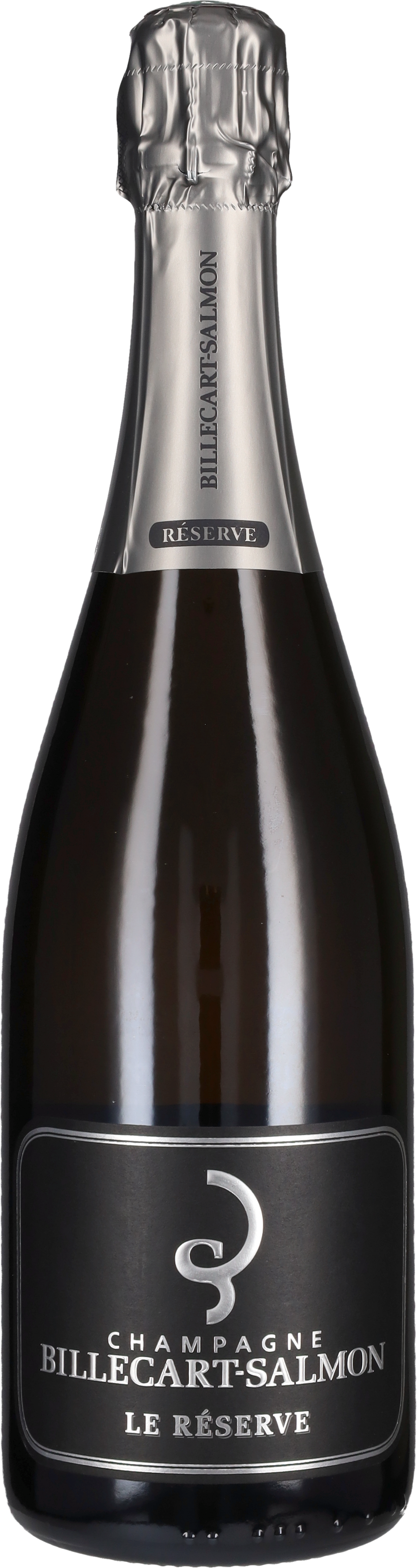
Champagne Brut Reserve Billecart SalmonThe Champagne Brut Reserve by Billecart Salmon is a Champagne made from Chardonnay, Pinot Noir and Pinot Meunier really subtle and harmonious, expressing the soul of the terroir of the Marne. The perfect union of the three most important grape varieties of the Champagne region made from a historic house and important; a house that helped write the history of Champagne in its 350-year history and picking grapes from more than 28 different municipalities. The Champagne Brut Reserve borns from the love between Nicolas François Billecart and Elisabeth Salmon and the small village of Mareuil-sur-Ay, a few kilometers east of Epernay, at the foot of the Montagne de Reims. "Finesse, equilibre et elegance", the motto of Billecart Salmon Champagne it is found in every product, even in the Brut Reserve evolving for at least 48 months on the lees. A Brut Reserve that gives us hints of gold offers a floral freshness and a pleasant bouquet of fresh fruit and ripe pear. Precise and subtle, of great freshness and minerality, with a final balanced and harmonious and a vein ethereal and fragrant: a Champagne that never disappoints and who helped write every day the history of this very important maison...47,00 £*Shipping: 48,00 £Secure redirect to the provider
-
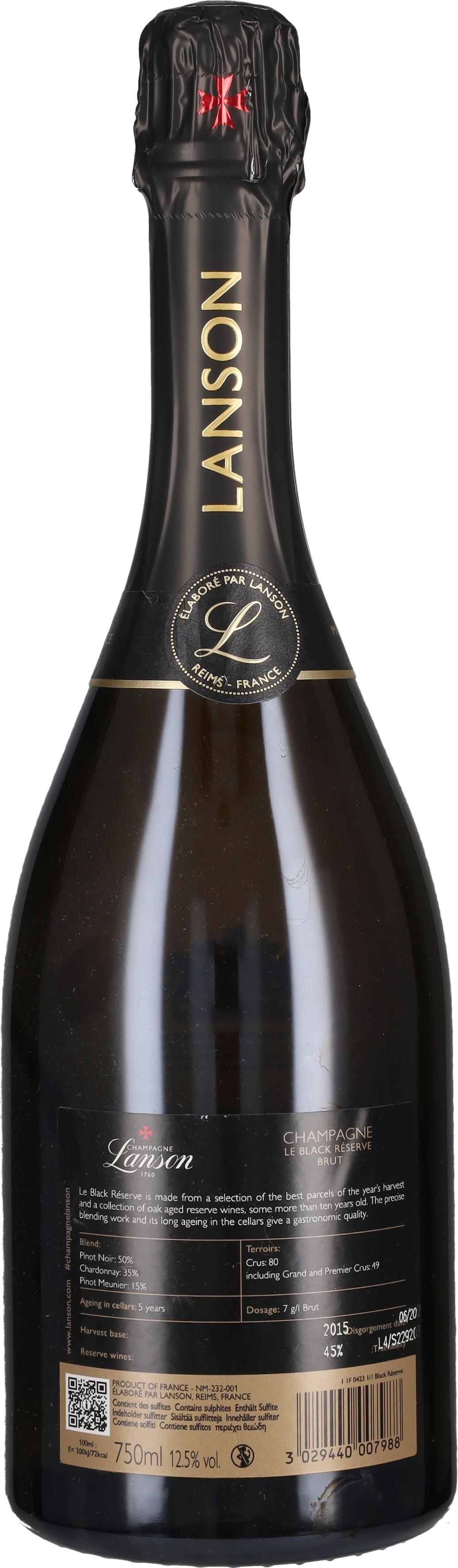
Champagne Brut 'Le Black Reserve' LansonThe Champagne Brut “Le Black Reserve” by Lanson originates in the renowned region of Champagne, the homeland of the eponymous wine and its different expressions. The winery is family-run and was founded in 1760. Their idea has always been to transcend national borders to export a product that could be appreciated worldwide, reaching a diverse audience in 80 different countries. Since 1900, they became the official supplier of Champagne to the British royal family, thanks to Queen Victoria who was the first to taste and appreciate their wines. The label always features the “Lanson Cross,” also known as the “Cross of Malta,” a symbol of openness, kindness, and hospitality. The Pinot Noir, Chardonnay, and Pinot Meunier grapes of the Champagne Brut “Le Black Reserve” by Lanson are the result of a careful selection in the vineyard of the best bunches destined for the winemaking process. The family owns about 100 different crus, and those of this product are a mix of Grand Cru and Premier Cru. The climate is continental with very hot and humid summers and harsh winters, often subject to sudden frosts. The harvest is conducted manually, and in the winery, alcoholic fermentation takes place in steel, followed by a secondary fermentation in the bottle according to the Champenoise method. It ages for at least 60 months on the lees. The Champagne Brut “Le Black Reserve” by Lanson presents itself in the glass with an intense straw yellow color with brilliant golden reflections and a fine and particularly persistent perlage. On the nose, it releases aromas of freshly baked bread crust, honey, cinnamon, and licorice root; on the palate, it is full-bodied, balanced, and has intense fruity aromas with a pleasant and long-lasting finish. It pairs perfectly with mixed cold cuts, white meats, and first courses based on seasonal vegetables; it is also interesting with raw fish tartare and blue cheeses. A product to be sipped on formal business dinner occasions to share with guests an authentic product that reveals the potential of the Champagne land.73,00 £*Shipping: 48,00 £Secure redirect to the provider
-
Did farmers become knights?
In medieval times, it was not common for farmers to become knights. Knights were typically members of the nobility or trained warriors who served a lord or king. However, in some cases, a farmer could potentially rise to the status of a knight if they displayed exceptional skill in combat or were granted the title by a higher-ranking noble or monarch. Overall, the path from farmer to knight was not a common or straightforward one in medieval society. **
-
Who are famous knights?
Some famous knights throughout history include Sir Lancelot, a prominent figure in the Arthurian legends known for his bravery and loyalty; Sir William Marshal, a renowned medieval knight and statesman who served under multiple English kings; and Sir Gawain, a noble and chivalrous knight from Arthurian legend known for his moral integrity and courage. These knights are celebrated for their valor, honor, and dedication to the code of chivalry. **
-
What replaced the knights?
The rise of gunpowder and firearms led to the decline of the traditional knight in warfare. As firearms became more advanced and widespread, the heavy armor and cavalry tactics of the knights became less effective on the battlefield. Additionally, the centralized power of monarchies and the professionalization of armies led to the decline of the feudal system and the need for knights as a military force. Instead, professional standing armies and modern military tactics replaced the role of the knights in warfare. **
-
How did knights live?
Knights lived a life of privilege and power, often residing in castles or manor houses. They were trained in combat and chivalry, and were expected to uphold a code of honor and loyalty to their lord. Knights were often landowners and had vassals who worked the land for them. They participated in tournaments, jousting, and other martial competitions, and were expected to protect their lord's lands and people. Overall, knights lived a life of luxury and prestige, but also had the responsibility of defending their lord and upholding the ideals of chivalry. **
* All prices are inclusive of VAT and, if applicable, plus shipping costs. The offer information is based on the details provided by the respective shop and is updated through automated processes. Real-time updates do not occur, so deviations can occur in individual cases. ** Note: Parts of this content were created by AI.